
RiskApplication Limited
Building one safety workflow across office, site and mobile
A production-ready safety SaaS connecting web administration, client access, configurable reporting and native field workflows across iOS and Android.
Visit website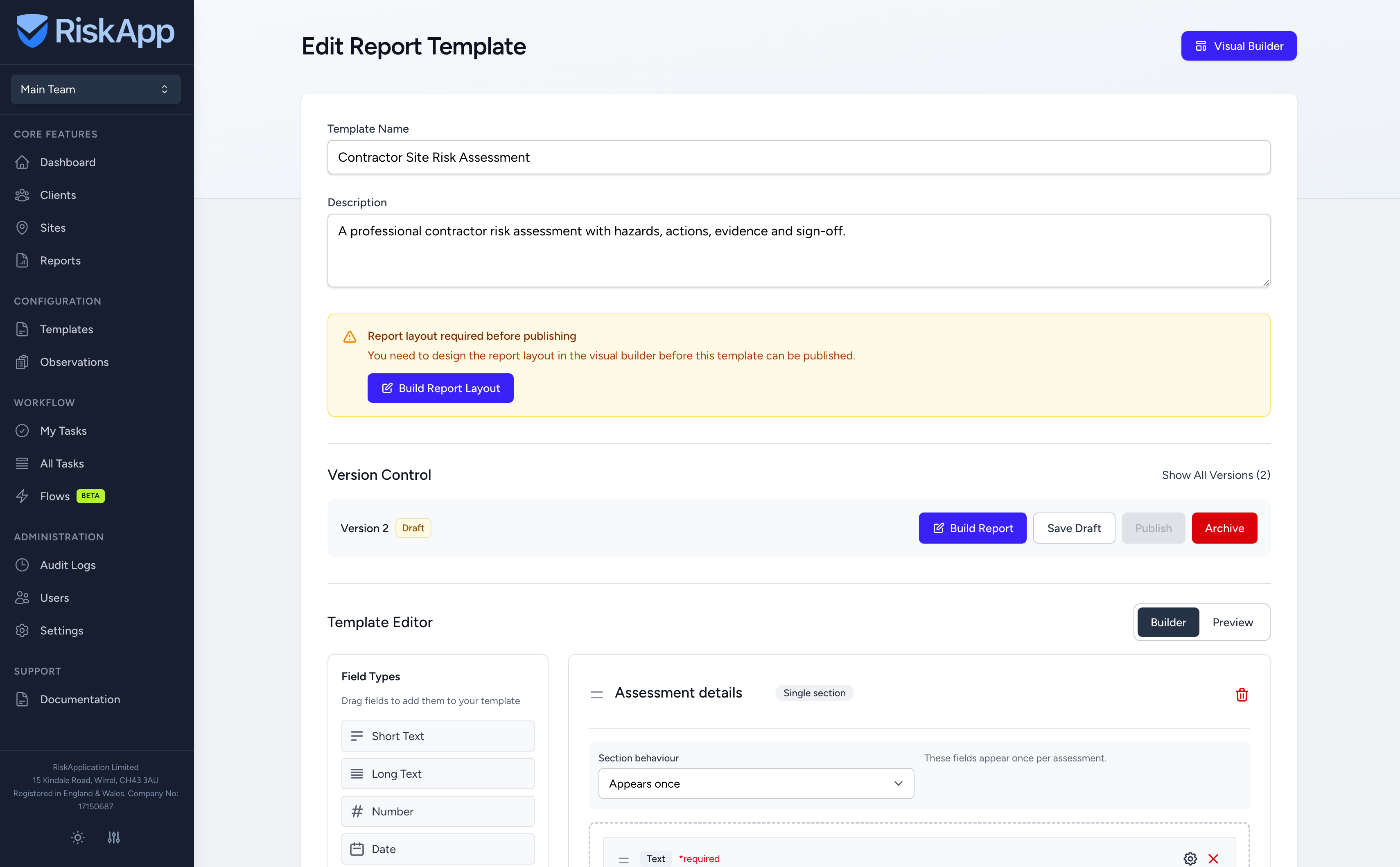
Challenge
Risk assessment work moves between office teams, inspectors and clients. RiskApp needed to keep that whole journey connected without making field work dependent on a reliable connection or forcing every organisation into the same report format.
Approach
We designed one team-based platform around the complete assessment lifecycle, combining Laravel administration and APIs, a dedicated client portal, configurable report templates and native mobile apps built for on-site capture and synchronisation.
Deliverables
- Product strategy and cross-platform workflow design
- Laravel SaaS application, administration portal and mobile API
- Secure client portal for completed reports
- Native iOS and Android companion apps
- Configurable report builder and client-ready PDF output
Outcomes
- One connected workflow for teams, clients, sites, tasks and assessments
- Versioned report templates that preserve completed assessment records
- Offline-capable field capture with photographs, observations and signatures
- Production-ready native companion apps for iOS and Android
- A client-facing route to review approved reports
One product around the full assessment lifecycle
Risk assessment work rarely happens in one place. Office teams organise clients, sites, templates and inspectors. Field users need to complete structured work on a phone or tablet. Clients need a clear way to receive the finished record.
RiskApp brings those responsibilities into one product. The public website explains the service, the Laravel application manages each organisation's operational data, the API connects the native apps and the client portal provides controlled access to approved reports.
Giving office teams control without slowing the site visit
The administration experience is organised around team-based access. Users can manage clients and locations, assign tasks, control report templates, review submissions and maintain an audit trail from one workspace.
The dashboard makes setup and current usage visible without hiding the practical next steps. Teams can move from creating a client and site to preparing a template, assigning work and reviewing the submitted assessment.
Configuration without losing report integrity
Different assessment types need different structures. RiskApp's visual report builder supports configurable sections, details grids, risk guides, repeating tables, observations, photographs, handwritten notes and signature sign-off.
Published template versions are immutable. A team can save and publish a new draft for future submissions while existing assessments remain tied to the version used when the work was completed. That gives teams flexibility without rewriting their historical records.
A focused client experience
The separate client portal keeps external access narrower than the administration application. Client users see their own sites and approved reports without being exposed to internal configuration, billing or team management.
Native workflows for work in the field
RiskApp includes production-ready native companion apps built with SwiftUI for iOS and Jetpack Compose for Android. They carry assigned work into a mobile experience designed for phones and tablets, with local storage, background synchronisation and clear offline status.
Inspectors can work through configurable forms, record observations, attach photographs, capture signatures and submit the finished assessment when connectivity allows. The server remains the source for templates, tasks and client-ready output, keeping the web and mobile experiences aligned.
A platform designed to keep evolving
RiskApp is more than a form presented on several screens. It is a connected SaaS architecture spanning customer acquisition, subscription management, team administration, mobile field work, report production and client delivery.
Keeping those surfaces in one product system means each new workflow can be considered from setup through to the final approved report, rather than becoming another disconnected tool for users to reconcile.